
Soups
Pork Sinigang with Kangkong and Radish
A comforting pork sinigang with radish, sitaw and kangkong, with clear guidance for adjusting the sour broth.
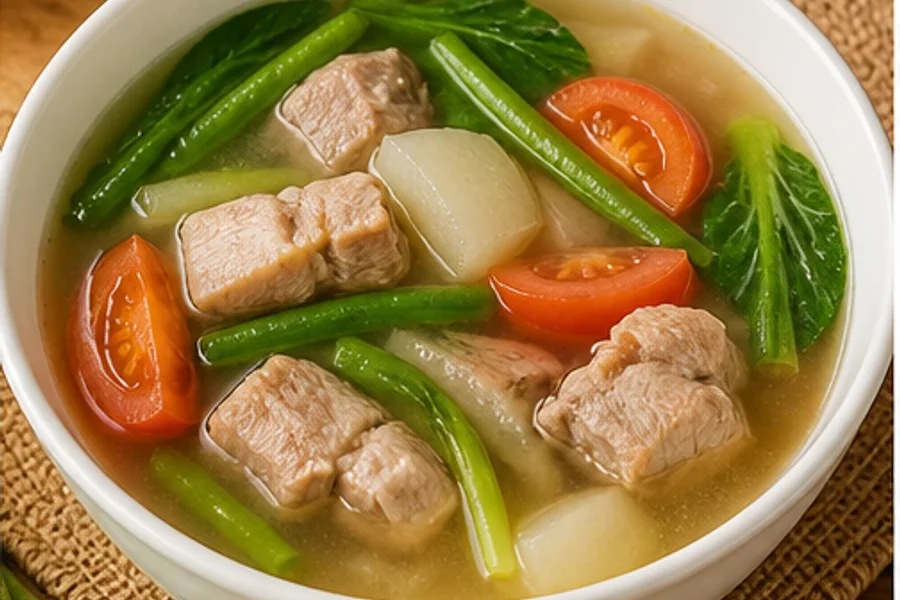
Good sinigang is sour, savory and fresh rather than simply salty. Cooking the pork first creates the base, while adding each vegetable according to its cooking time keeps the radish tender and the kangkong bright.
Ingredients
- 800 g pork belly or pork ribs, cut into serving pieces
- 8 cups water
- 1 onion, quartered
- 2 tomatoes, quartered
- 1 medium labanos, sliced
- 8 pieces sitaw, cut into 5 cm lengths
- 1 small talong, sliced
- 1 packet tamarind soup base, or to taste
- 2 cups kangkong leaves and tender stems
- 2 long green chilies
- Fish sauce and black pepper to taste
How to cook it
- Place pork and water in a pot and bring to a boil. Skim the gray foam for a cleaner broth.
- Add onion and tomatoes. Lower the heat, cover partly and simmer until the pork is tender, 35 to 45 minutes depending on the cut.
- Add labanos and simmer for 6 minutes. Add sitaw and eggplant and cook for another 4 minutes.
- Dissolve only three-fourths of the soup-base packet in hot broth, then stir it into the pot. Taste before adding the rest.
- Add green chilies and kangkong. Cook just until the leaves wilt, about 1 to 2 minutes.
- Season gradually with fish sauce and pepper. Serve while the broth is hot.
Why this method works
Soup-base packets and fresh tamarind vary in strength. Adding souring agent in stages gives you control, and seasoning with fish sauce only after sourness is set prevents an overly salty pot.
- Pork ribs make a lighter broth; belly makes a richer one.
- Fresh sampalok may replace soup mix when available: boil until soft, mash in its cooking water, then strain.
- Do not keep boiling kangkong; residual heat finishes it quickly.
How to serve
Serve with rice and a small saucer of patis with calamansi and chili for diners who want extra seasoning.
Recipe tested and reviewed by Sarap Recipe Editorial. Taste and cooking time may vary with ingredient size, stove heat and product brand.
Share this recipe
Send it to someone who would enjoy cooking it.
Was this recipe helpful?
Your feedback helps us improve our cooking guides.